Monday, March 11, 2013
updated professional opportunities
Thursday, March 7, 2013
FREE Webinar: Recreational Homes, Gateway Communities & Rural Development
Since many of our communities rely on tourism generated by natural amenities, this may be a worthwhile webinar to participate in!
From: North Central Regional Center for Rural Development [mailto:NCRCRD@anr.msu.edu]
Sent: Wednesday, March 06, 2013 3:52 PM
Subject: NCRCRD Webinar: Recreational Homes, Gateway Communities & Rural Development
Feel free to share with others who may be interested in the upcoming NCRCRD webinar:
| WEBINAR ANNOUNCEMENT Recreational Homes, Gateway Communities, and Rural Development Dave Marcouiller (University of Wisconsin) Mark Skidmore (Michigan State University) Richelle Winkler (Michigan Tech University) March 13, 2013 3:00 PM – Eastern Time |
About the webinar:
Recreational homes and their occupants create both opportunities and pitfalls for communities in rural amenity-rich regions. This webinar will outline an applied research agenda and introduce a set of outreach materials to assist community leaders in addressing the set of issues surrounding recreational homes and their use.
For a “Sneak Peek” go to: http://ncrcrd.msu.edu/ncrcrd/webinars
About the Speakers:
Dave Marcouiller. Dave’s work deals with issues of resource-dependency and the unique planning needs of remote rural regions. His research focuses on amenity-based rural development, land use compatibility & conflict, integrative tourism planning, and outdoor recreation.
Mark Skidmore. Mark’s research has focused on public sector economics and economic development. He has provided technical and consulting services on a range of issues related to economic development and government public finance and policy.
Richelle Winkler. Richelle is a community and environmental sociologist with skills in demographic methods, statistical analysis, geographic information systems (GIS), spatial data analysis, and community-based research. In particular, Dr. Winkler is interested in studies regarding the interaction of environment, natural resources, and population change; community based participatory research projects with local community groups; and patterns of rural migration in the United States.
Registration: There is no registration and no fee for attending this webinar.
To join the webinar go to http://connect.msu.edu/ncrcrd, “enter as a guest” is by default already chosen. Type your name into the text box provided, and click on “Enter Room”. You are now in the meeting room for the webinar.
The webinar will be recorded and archived at http://ncrcrd.msu.edu/ncrcrd/chronological_archive.
To receive these announcements directly, or to correct errors in our distribution list, please email soliz@anr.msu.edu.
North Central Regional Center for Rural Development
Agriculture Hall
446 W. Circle Drive, Room 66
Michigan State University
East Lansing, MI 48824
517.355.3373
Website: http://NCRCRD.org
Email: ncrcrd@anr.msu.edu
Follow us on Twitter: http://twitter.com/NCRCRD
Facebook: http://www.facebook.com/group.php?gid=81941506229
Tuesday, March 5, 2013
Community Snapshots, March 13th CANCELLED
Due to lack of registrations, the Community Snapshots: Socio-economic Data Edition workshop for March 13, 2013 has been cancelled.
Please the attached brochure for other professional development opportunities for you, community leaders and interested persons in your county.
Sorry for any inconvenience this might cause!
Dave Shideler
Assistant Professor and Community Development Specialist
Department of Agricultural Economics
Oklahoma State University
323 Ag Hall
Stillwater, OK 74078
405-744-6170
http://rd.okstate.edu
Follow my blog Oklahoma Extension Development Resources
upcoming webinars: local food systems, Pinterest for Business
Pinterest for Your Business
March 14
2:00 p.m. (ET); 1:00 p.m. (CT); 12:00 p.m. (MT); 11:00 am (PT)
Connect to webinar - https://connect.extension.iastate.edu/etc-cop
eXtension - Entrepreneurs and Their Communities
Learn how to better utilize Pinterest for your business when you attend!
Just when you thought you’d gotten a handle on social media by getting on Facebook and maybe giving Twitter a try, along comes Pinterest. Pinterest is now the number three most-popular social network in the U.S., behind only Facebook and Twitter, according to Experian’s Digital Marketer Trend and Benchmark Report. Thru this webinar an introduction to what Pinterest is and why you should use it for your business will be presented. Also discussed will be setting up a Pinterest account, how to interact, and how to create pin boards.
Presenters Tara Gross is a young entrepreneur and owner of Country Drawers in Cambridge, Nebraska and Connie Hancock is an Extension Educator from UNL Extension.
Check us out on Facebook at http://www.facebook.com/eXtensionentrepreneurs
To learn more about other eXtension educational programs - https://learn.extension.org
eXtension Entrepreneurship - http://www.extension.org/entrepreneurship
Recording of eXtension Webinars - http://www.extension.org/pages/16076/etc-webinar-archive
Mark your calendars! The eXtension Entrepreneurship webinar series continues with some very timely topics. All webinars will air monthly on the second Thursday at 2:00pm (ET); 1:00pm (CT); 12:00pm (MT); 11:00am (PT).
No pre-registration is required and there is no fee to participate. About 10 minutes prior to the start time simply go the Adobe Connect Pro meeting room at https://connect.extension.iastate.edu/etc-cop. You will be presented with a login screen that has an "Enter as Guest" option. Enter your full name then click "Enter Room" to join the conference. You will be able to hear the audio directly from your computer’s speakers.
Community, Local and Regional Food System (CLRFS) eXtension Community of Practice (CoP). The Applachian Foodshed Project is a partner of this CoP and will be participating in the webinar.
Wednesday, March 20, 2013
1PM EST
https://connect.extension.iastate.edu/clrfs
During this webinar, we will feature two projects from different regions of the country working to enhance community and regional food systems.
The two projects highlighted during this webinar are funded through the Agriculture and Food Research Initiative (AFRI)/National Institute of Food and Agriculture (NIFA) Food Security grant program. Projects funded are multi-state, multi-year initiatives that address research, outreach, and education. A second webinar on two other projects will be offered on Wednesday, April 17.
The two projects to be featured:
"Enhancing Community Food Security in Appalachia: Lessons Learned from the Applachian Foodshed Project"
Kim Niewolny and Nikki D'Adamo-Damery
Presenters will provide an overview of the Applachian Foodshed Project and the systems-level work and partnerships that uniquely define our aim of enhancing community food security in the Applachian regions of Virginia, North Carolina, and all of West Virginia. The presenters will share key updates and lessons learned from this multifaceted effort with a focus on coalition building and Action Research.
"Innovations in Community & Regional Food Systems"
Steve Ventura and Greg Lawless
Presenters will describe the Community & Regional Food Systems project - a collaboration of the University of Wisconsin-Madison, University of Wisconsin-Extension, Growing Power, Inc., and numerous community based organizations in seven select cities. Presenters will explain the development of our research and outreach methodology called community engagement projects (CEPs) and will share a preliminary version of a community and regional food systems 'framework' for understanding components of values-based food systems.
Start connecting 5 minutes prior to the start time. You need a computer with Internet access and speakers. At the meeting time, copy and paste this URL into your browser to enter the meeting: https://connect.extension.iastate.edu/clrfs
** Learn about current research and outreach efforts in this exciting field! This webinar is the first is a planned series where eCoP members will share results from on-going projects. If you are interested in presenting your work, please contact me Sharon Lezberg (slezberg@wisc.edu) or Mary Hendrickson (HendricksonM@missouri.edu )
Identifying Gaps and Barriers along the NC Sustainable Farm-Food Value Chain: Delphi Study
Registration is now open for the March 28, 2013, 1-2 pm ET, WCRL Webinar -. Click here to register. Please share the link with your networks!
Assistant Professor and Community Development Specialist
Department of Agricultural Economics
Oklahoma State University
323 Ag Hall
Stillwater, OK 74078
405-744-6170
http://rd.okstate.edu
Follow my blog Oklahoma Extension Development Resources
FW: Publications, Tools, and Funding
From our colleagues at USDA-Rural Development. Several opportunities relate to manufacturing and/or rural populations specifically. Also, take note of the link to the proposed definition of "rural," which is to take effect on March 28, 2013.
From: Agans, Suzette - RD, Washington, DC [mailto:Suzette.Agans@wdc.usda.gov]
Sent: Thursday, February 28, 2013 2:35 PM
Subject: Publications, Tools, and Funding
REPORT ON THE DEFINITION OF RURAL – Recommendations to Congress, as per the Farm Bill, of (re) defining Rural. Also includes the date March 28, 2013, when a new definition takes effect.
http://www.rurdev.usda.gov/Reports/RDRuralDefinitionReportFeb2013.pdf
PUBLICATIONS
Manufacturing Bouncing Back
America's manufacturing sector is recovering and poised for a modest rebound. The question is how much?
The long decline in America's manufacturing sector finally is over. During the past two years, manufacturing output has regained almost three-quarters of the stunning 20% drop it took during the Great Recession. And manufacturing firms have pared their production costs and improved their efficiency. Now they are poised for a comeback. Read More
By: Art Pine/Kiplinger
The Geographic Concentration of Manufacturing Across the United States.
Manufacturing has been one of the major bright spots in the economic recovery of the last few years, contributing more than 25 percent of the overall growth in GDP between 2009 and 2011 and adding roughly 500,000 new jobs between the beginning of 2010 and the end of 2012. This trend is especially welcome as manufacturing jobs often provide higher wages and better benefits than non-manufacturing jobs. Read More.. By: Economics and Statistics Administration
Program to Entice People to Rural Kansas Working - Feb 4, 2013 -- NECN.com article tells of the Kansas Rural Opportunity Zone incentive, a program that pays back a portion of student loans and gives income tax breaks to those who move to a declining county.
Rural Poor are Concentrated - Jan 31, 2013 -- Daily Yonder discusses how poverty in rural America is more concentrated than in urban counties. Poor people are more likely to live in counties where a high percentage of people live in poverty.
EPA Releases New Report on Strategies to Advance Equitable Development
A new U.S. Environmental Protection Agency (EPA) report, written by the Office of Sustainable Communities and the Office of Environmental Justice, explains approaches for low-income, minority, tribal, and overburdened communities to shape development that responds to their needs and reflects their values. Creating Equitable, Healthy, and Sustainable Communities: Strategies for Advancing Smart Growth, Environmental Justice, and Equitable Development provides a menu of land use and community design strategies community-based organizations, local and regional decision-makers, developers, and others can use to revitalize their communities. Case studies highlight seven communities that have used these strategies: Edmonston, MD; Chicago, IL; Spartanburg, SC; New Orleans, LA; Ohkay Owingeh, NM; Boston, MA; and Seattle, WA. Click here to download the report.
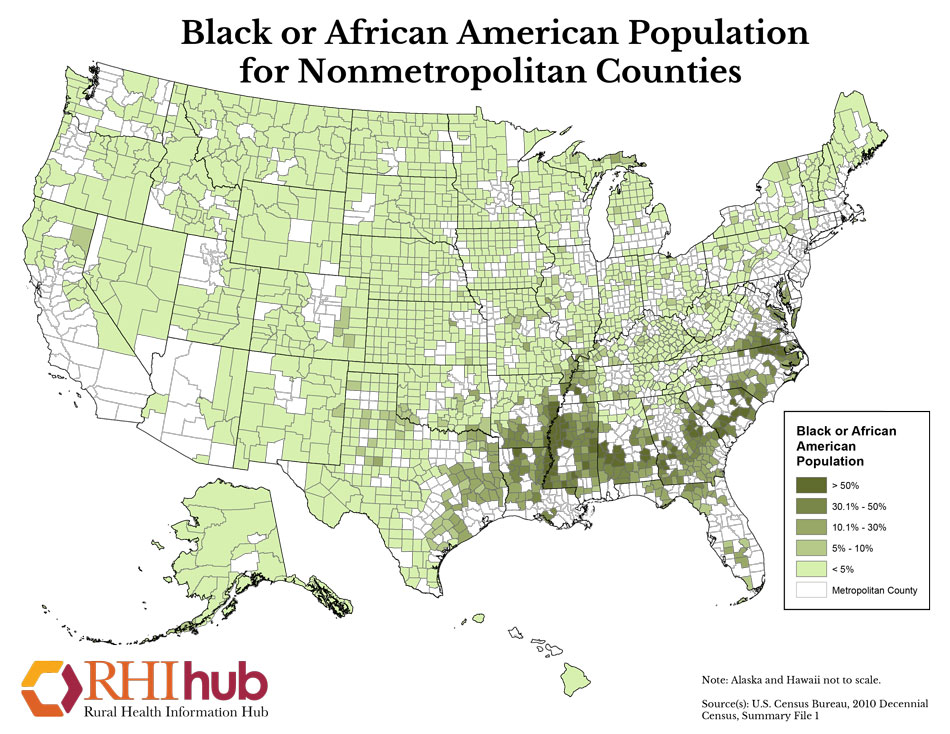
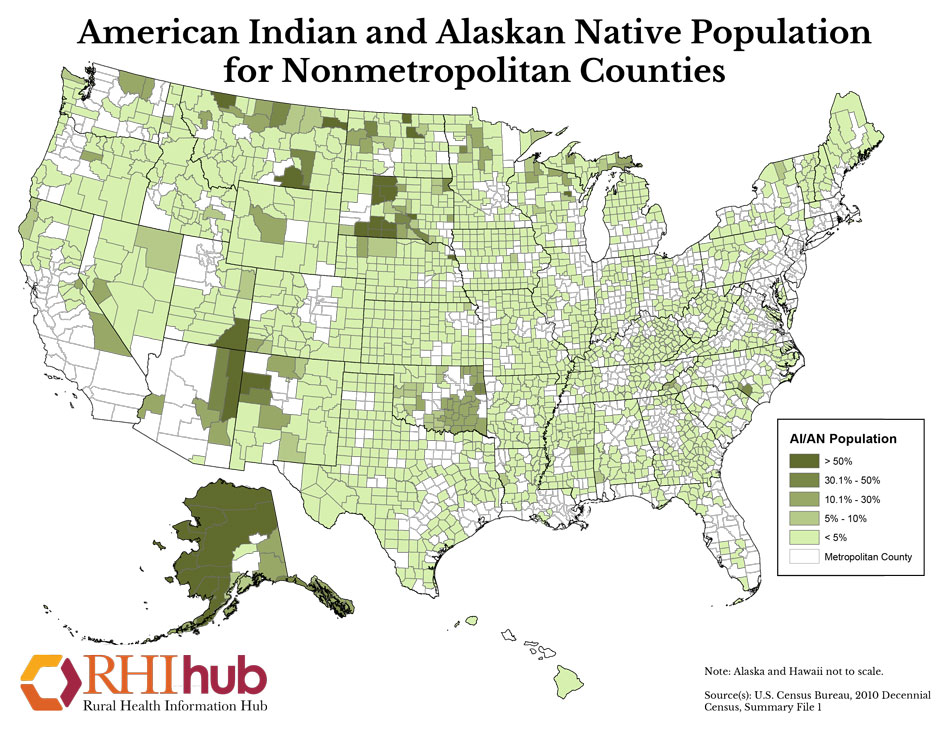
New Minority Population Maps are Available
The Rural Assistance Center announces the addition of two new maps featuring data on 1) American Indian and Alaska Native Population and 2) Black or African American Population.
Vibrant Rural Communities Case Studies Series
Collection of case studies describing how rural communities and regions use strategies including downtown redevelopment, historic preservation, streetscape improvements, land conservation, and tourism to grow economies and create stronger communities. Currently, case studies feature New Mexico, Kentucky, Wisconsin, Georgia, Wyoming, Pennsylvania, and Iowa.
Organization: National Association of Development Organizations
Rural Natives' Perceptions of Strengths and Challenges in Their Communities
Explores how Native Americans view the current socioeconomic and environmental state of their communities and their future within them. Data from two sources were used to develop report: the Community and Environment in Rural America (CERA) surveys and focus groups with Native leaders in one rural state. Organization: Carsey Institute. Date: 2013
Agriculture's role in climate change: greenhouse gas emissions and carbon sequestration - Agriculture (including on-farm energy emissions) accounted for about 8 percent of U.S. greenhouse gas (GHG) emissions in 2010. Since farm production represents about 1 percent of total U.S. gross domestic product (in real gross value-added terms), the sector is relatively GHG-intensive. In all U.S. sectors except agriculture, the largest contributor to GHG emissions is fossil fuel combustion for energy. In agriculture, crop and livestock activities are unique sources of nitrous oxide and methane emissions, notably from soil nutrient management, enteric fermentation (a normal digestive process in animals that produces methane), and manure management. These emissions dominate the contribution of energy related emissions in the sector. The land-based activities of agriculture—as well as forestry—also have the unique capacity to withdraw ("sequester") carbon dioxide (CO2) from the atmosphere and store it in soil and biomass sinks through activities such as no-till on cropland or land use change from croplands to grasslands. EPA estimates that U.S. carbon land-sinks offset close to 15.8 percent of total U.S. emissions in 2010. Agriculture provided 4 percent of U.S. sinks in 2010.
Rural farm counties weather recession - Nonmetro counties classified by ERS as dependent on farming have historically lagged other nonmetro counties in growth. However, with agriculture generally thriving through the recession and recovery period, farm counties have had relatively healthy growth since 2009. Bureau of Economic Analysis statistics show that 18 percent of farm counties lost jobs in 2009-2011, but this was a far lower than the 45 percent proportion found among other nonmetro counties. Some of the gain in farm counties was due to growth in shale mining for oil and gas. A chart available and based on the County Typology Codes, found on the ERS website.
TOOLS
BusinessUSA.gov, a Presidential initiative designed to help small business and exporters Discover opportunities, Connect with the right resources and Grow was recently re-launched.
BusinessUSA is the first fully integrated federal website, reflecting a new level of collaboration among federal agencies and a stronger commitment to more streamlined and efficient customer service. Check out the new BusinessUSA! We've created a simpler and more intuitive website for users.The new BusinessUSA offer visitors a direct path to programs and tools such as financing, exporting, starting and growing a business, veteran's programs and disaster assistance. http://business.usa.gov/
2012 Small Business Profiles for States and Territories
Supplies data on small businesses in each of the 50 states, the District of Columbia and limited data on the U.S. territories. Topics covered include: the number of firms, demographics of business ownership, small business income, banking, business turnover, industry composition, and employment gains and losses by size of business. Organization: Small Business Administration
SBA Local Assistance - Directory of local SBA district offices that provide counseling, mentoring, and training for small businesses. Organization: Small Business Administration
Conducting Homeless Counts on Native American Lands: A Toolkit
Highlights steps, tools, and methods that can be used to complete an accurate homeless count on American Indian, Alaska Native, and Hawaiian Home Land (AIANHH) lands. Toolkit is based upon past research as well as interviews with key stakeholders in the field. Organization: Housing Assistance Council. Date: 02 / 2013
5 more ways to overcome barriers to youth engagement - Engaging young people in community efforts can be easier said than done. Check out our list of five additional challenges, along with possible solutions you can implement right away.
Grow your own is a ground up, community-based approach to economic development. Instead of putting resources into economic development strategies that reach outside of the community, it focuses resources on existing community strengths, small businesses and developing job-creating entrepreneurs. Communities using a grow your own strategy develop policies and activities to spur innovation, entrepreneurship and local business growth. Check out the Grow Your Own Guide from the Federal Reserve Bank of Kansas City.
Manufacturing Concentrations around the USA
This past month the U. S. Department of Commerce released the report "The Geographic Concentration of Manufacturing Across the United States." It provides a fascinating look at one of the bright spots in the ongoing economic recovery.
In 2010, there were 629 counties where earnings paid to manufacturing employees exceeded 20% of the total earnings. States with over 30 counties were Indiana, Ohio, Tennessee, Wisconsin, Georgia, Iowa and Kentucky. Rural and micropolitan counties accounted for 425 of the 629 counties in the study.
Indiana, with 50 counties cited, has 22.3% of their total earnings coming from their 13.1% of employment base in manufacturing. Those employed in manufacturing earn 70% more than average in Indiana. There was a similar increase in wages for manufacturing in WI (up 56%); Iowa (66%); Ohio (60%); Michigan (69%); and Alabama (51%).
While manufacturing accounts for 11.9% of the U. S.'s GDP, from 2009 to 2011 it accounted for more than 25% of the overall growth in GDP during the same period of time. Over 500,000 manufacturing jobs were added since the lows of 2009.
This quote from the report summarized why we are so enthused about the impact of manufacturing in rural America: "Manufacturing is not isolated from the rest of the economy, and in places where a significant portion of economic activity is due to manufacturing, other types of business benefit. In other words, the presence of manufacturing in a community generates direct and indirect jobs and confers additional economic benefits that exceed the earnings and employment measures described above. As the economy continues to recover, the hope and expectation is that manufacturing will continue its rebound and contribute to the generation of more relatively high paying jobs."
FUNDING
Administration for Community Living Announces Funding Opportunity for Inclusive Transportation Planning
The U.S Administration for Community Living's Strengthening Inclusive Coordinated Transportation Partnerships to Promote Community Living program has issued a Request for Proposals for innovative inclusive transportation planning projects. These projects are a key component in the overall program's efforts to improve consumer involvement and ensure greater responsiveness to consumers' needs in the planning, design and operation of coordinated transportation systems. For more information, click here.
ARC Announces Grants for Make it in America Challenge
The Appalachian Regional Commission (ARC) is making available up to $50,000 (up to $5,000 per project) in funding to help organizations serving the Appalachian Region develop applications for the Make it in America Challenge, a national federal competition focused on increasing the insourcing of American jobs that either have moved overseas but are now more competitively sourced in America; can be created through foreign direct investment; or are currently U.S.-based but are subject to international competition and can be strengthened with targeted technical assistance. The Make it in America Challenge will award more than $43 million in federal funds. A federal funding opportunity (FFO) to be published in early 2013 at www.grants.gov will provide detailed guidelines for submitting an application to the challenge. To be eligible applicants must submit to ARC by email a letter of intent to participate in the challenge; letters of intent at currently being accepted. Applicants must submit the required information to ARC at insourcing@arc.gov no later than two weeks after the FFO issue date. ARC funding applicants will be notified of their eligibility for reimbursement within three weeks of the release of the FFO. Click here to view the original article.
Ben & Jerry's Foundation Seeks Proposals for Social and Environmental Justice Project - Grants will support nonprofit community-organizing groups in the United States working to further social and environmental justice and support sustainable and just-food systems.... Deadline: May 1, 2013
Land o'Lakes Foundation Accepting Applications for Projects that Benefit Rural Communities - Grants will be awarded to organizations working to address hunger, youth education, and arts and culture in rural communities.... Deadline: April 1, July 1, and October 1, 2013
Dominion Accepting Applications for K-12 Energy/Environment-Related Math and Science Programs - Grants of up to $10,000 will be awarded to schools, colleges, and nonprofits in the company's service area working to improve math and/or science education through study of the environment or energy.... Deadline: May 1, 2013
Lawrence Foundation Accepting Proposals for Environmental, Education, Human Services Projects - The foundation awards program and operating grants in a range of areas, including the environment, education, human services, and disaster relief.... Deadline: Rolling (April 30, November 1)
Sustainable Forestry Initiative Seeks Proposals for Conservation and Community Partnerships Program - The program awards grants of up to $5,000 to foster partnerships between organizations working to improve forest management in the United States and Canada and responsible procurement globally.... Deadline: March 18, 2013
Massage Therapy Foundation Invites Applications for 2013 Community Service Grants - The program awards grants of up to $5,000 to organizations that provide massage therapy to individuals who currently have little or no access to such services.... Deadline: April 1, 2013
Commonwealth Fund Accepting Letters of Inquiry for Patient-Centered Coordinated Care Program - The program aims to improve the quality of primary health care in the United States by supporting efforts to center care around the needs and preferences of patients and their families.... Deadline: Open (Letters of Inquiry)
Cornerstone OnDemand Foundation Seeks Applications for HR Management Software Grants - The company's Impact Grant program provides software and professional services worth up to $1 million to help nonprofits implement a learning management system.... Deadline: March 15, 2013
Department of Justice, Office on Violence Against Women Grants
- Sexual Assault Services Culturally Specific Grant Program - Application deadline: Mar 7, 2013
Funding to create, maintain, and expand sustainable culturally-specific sexual assault services for underserved populations. - Education, Training, and Enhanced Services to End Violence Against and Abuse of Women with Disabilities - Application deadline: Mar 26, 2013
Grants to support multidisciplinary collaborative teams that offer services and support to individuals with disabilities who have been victims of sexual assault, domestic violence, dating violence, and stalking. - Rural Sexual Assault, Domestic Violence, Dating Violence and Stalking Assistance Program - Application deadline: Mar 26, 2013
Funding for projects designed to address and prevent sexual assault, domestic violence, dating violence, and stalking in rural jurisdictions. - Grants to Enhance Culturally Specific Services for Victims of Sexual Assault, Domestic Violence, Dating Violence and Stalking Program - Application deadline: Mar 27, 2013
Funding for culturally-specific, community-based organizations to address the needs of women who have experienced sexual assault, domestic violence, dating violence, and stalking. - Transitional Housing Assistance Grants for Victims of Sexual Assault, Domestic Violence, Dating Violence, and Stalking Program - Application deadline: Apr 4, 2013
Supports programs that provide assistance to victims of domestic violence, dating violence, sexual assault, and stalking who are in need of transitional housing, short-term housing assistance, and related support services.
Schools and Libraries Program Universal Service Fund - Application deadline: Mar 14, 2013
Provides discounts to help schools and libraries obtain affordable telecommunications and Internet access.
Inclusive Coordinated Transportation Partnership Project - Application deadline: Mar 20, 2013
Funding for organizations that are involved in the administration, delivery, or coordination of transportation, aging, and/or disability services to include seniors and individuals with disabilities in their planning processes.
Sustainable Construction in Indian Country Small Grant Program - Application deadline: Mar 25, 2013
Funding for programs that encourage the use of sustainable construction practices in Native American housing.
Typical or Troubled? School Mental Health Education Grants - Application deadline: Mar 30, 2013
Provides funding to schools to implement the Typical or Troubled? school mental health educational program.
Libri Books for Children Program - Application deadline: May 15, 2013. Donates new, quality, hardcover children's books to small, rural public libraries in the United States.
Rural Broadband Access Loan and Loan Guarantee Program - Application deadline: Applications accepted on an ongoing basis.
This program furnishes loans and loan guarantees to provide funds for the costs of construction, improvement, or acquisition of facilities and equipment needed to provide service at the broadband lending speed in eligible rural areas.
The Glaser Progress Foundation grants - When future generations look back on us, what gauges will they use to decide whether we made genuine Progress? Based on the interests of its founder and managing board, the Glaser Progress Foundation accepts grant proposals in the areas of measuring progress, animal advocacy, and independent media.
Suzette M. Agans
Rural Development | Community and Economic Development
U.S. Department of Agriculture
1400 Independence Ave., S.W. Stop 3254 | Washington, D.C. 20250
Phone: 202.401.1922 | Fax 202.401.7311
www.rurdev.usda.gov
"Committed to the future of rural communities"
"Estamos dedicados al futuro de las comunidades rurales"
This electronic message contains information generated by the USDA solely for the intended recipients. Any unauthorized interception of this message or the use or disclosure of the information it contains may violate the law and subject the violator to civil or criminal penalties. If you believe you have received this message in error, please notify the sender and delete the email immediately.
Wednesday, February 27, 2013
FW: March 13 In-service
FYI
The March 13, 2013 Community Snapshots: Socio-Economics Edition workshop will be held at the Cleveland County Extension Office (601 E. Robinson, Norman, OK). Please see the attached brochure for more details and a registration form.
Thanks!
Dave Shideler
Friday, February 22, 2013
FW: Publications, Tool, Learning, and Funding
Resources from our colleagues at USDA-Rural Development. Seems to be theme running about social enterprises (e.g., non-profits).
From: Agans, Suzette - RD, Washington, DC [mailto:Suzette.Agans@wdc.usda.gov]
Sent: Friday, February 22, 2013 2:52 PM
Subject: Publications, Tool, Learning, and Funding
PUBLICATIONS
New Report Highlights Strategies to Improve Municipal Stormwater Permits
American Rivers has released a new report Permitting Green Infrastructure : A Guide to Improving Municipal Stormwater Permits and Protecting Water Quality which “provides clear examples of new developments in municipal stormwater permits that foster on-site management of stormwater by encouraging or requiring that runoff be controlled through the practices commonly referred to as ‘low impact development’ or ‘green infrastructure’.” This report contains model permit language, as well as legal and regulatory standards to guide municipalities in improving their local systems. To read the report, click here.
Beginning farms participate less than established farms in Government farm payment programs - Consistent with their commodity specializations, beginning farms—those whose operators have 10 or fewer years of farm operator experience—are less likely than more established farms to participate in Government direct-payment programs. Most farm programs focus on cash grain production while relatively few beginning farms specialize in cash grains. As a result, while they represented 22 percent of all farms in 2011, beginning farms accounted for only 14 percent of all farms that received Government payments, and received only 9 percent of all payments that year. However, beginning farmers and ranchers do avail themselves of other farm programs targeted at their needs, including farm loans, the Conservation Reserve Program’s Transition Incentive Program, and the Beginning Farmer and Rancher Development Program. A chart is found in the ERS report, Beginning Farmers and Ranchers at a Glance, EB-22, January 2013.
The Rural Monitor - special edition of the Rural Monitor celebrating 10 years of service to rural America. Includes a focus on recurring topics of care coordination, health promotion and housing; and provides updates on organizations featured in previous articles.
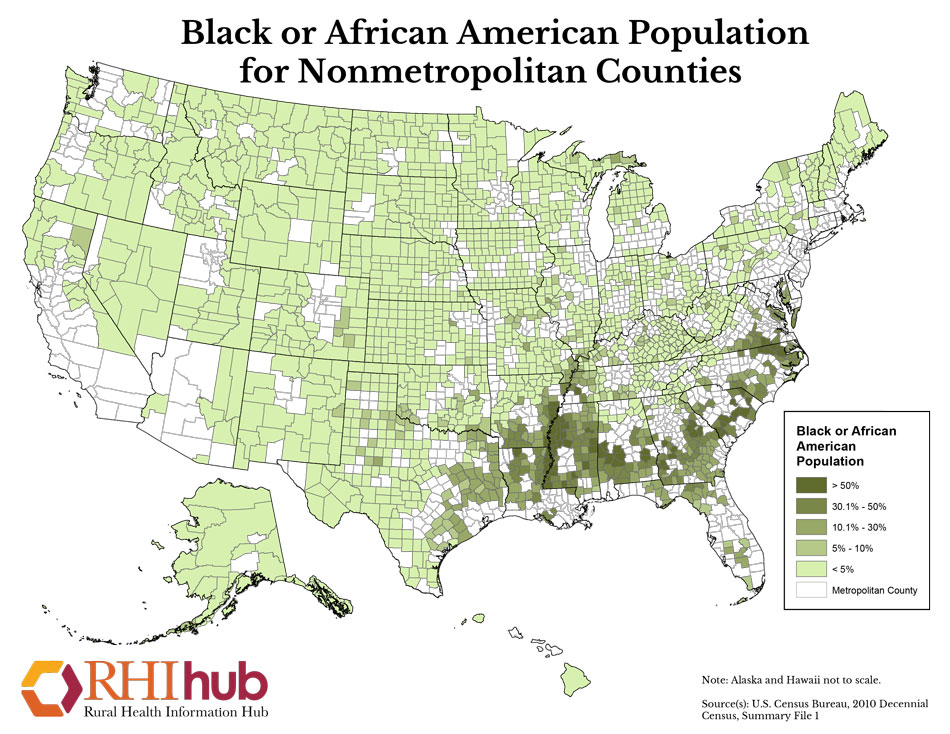
New Minority Population Maps are Available
The Rural Assistance Center announces the addition of two new maps featuring data on 1) American Indian and Alaska Native Population and 2) Black or African American Population.
Teen Parenthood Most Common in Rural America
Feb 21, 2013 -- Today, the National Campaign to Prevent Teen and Unplanned Pregnancy released a brief highlighting new data on teen childbearing in rural America. The study found that the teen birth rate in rural counties is nearly one-third higher compared to the rest of the country.
Community Connections - Access case studies spotlighting hospitals and health systems (some are in rural areas) that have successfully collaborated with local community organizations to promote care coordination, wellness, and prevention. Website also includes tools and resources to help health care facilities be accountable and transparent to their communities and deliver quality care.
Organization: American Hospital Association
Farm household income forecast up in 2012 and 2013, varies by source and level by farm typology - Median total farm household income is forecast to increase by 1.2 percent in 2012, to $57,723, and by an additional 1.9 percent in 2013, to $58,845. Given the broad USDA definition of a farm, many farms are not profitable even in the best farm income years. Despite high prices for many crops, 2012 was no exception, with median income from farming projected to be -$2,799. On the other hand, commercial farms (those with $250,000 or more in gross sales) derive the majority of their income from farming. Their median income from farming increased by 7.9 percent in 2011, as did their total household income. (Income forecasts by farm typology are not available for 2012 and 2013.) Gains in income for households associated with smaller farms--whether farming is considered the operator’s primary occupation (referred to as intermediate farms) or not (residential farms)--came from higher off-farm income in 2011. A chart is found in the Farm Household Well-being topic page on the ERS website, updated February 11, 2013.
Small Business Profile for the States and Territories, The Small Business Administration today has announced the availability of this annual analysis of each state’s small businesses. The report finds that small businesses employ 55 million workers nationwide, nearly half – 49.1 percent – of the private-sector labor force. All in all, the country’s 27.8 million small businesses now represent 99.7 percent of all employers in the United States. The report also states that self-employment improved over the last decade nationwide, while minority self-employment saw the largest growth.
Each state’s small business profile contains detailed information about the number and type of businesses in each state, business owner demographics, industrial makeup, business turnover and income and finance. Most data are also presented in comparison with similar data over time. Each state’s small business profile can be read or downloaded by visiting the Office of Advocacy’s website at www.sba.gov/advocacy/848.
TOOL
Tip Sheet 11: Business Plan Outlines for Social Enterprises
LEARNING
Webinar: Got Unrestricted Revenue? The Social Enterprise Process, 2/27/2013 - 1PM ET
Jean Block - Social Enterprise Ventures, LLC
This fast-paced webinar is taught by a nonprofit consultant and trainer who has led nearly 100 nonprofits through the process to write their business plan for earned income. You’ll explore the seven key steps required to launch a successful social enterprise....read more.
Webinar: Social Change Anytime Everywhere: Best Practices to Build a Multichannel Campaign Plan, 2/27/2013 - 3PM ET
Amy Sample Ward - NTEN
This session provides highlights from the new book Social Change Anytime Everywhere: How to Implement Online Multichannel Strategies to Spark Advocacy, Raise Money, and Engage your Community by Allyson Kapin and Amy Sample Ward and gives you the next steps you need to start working to create real social change online and on the ground....read more.
3.13 NCBA Webinar: Save Time, Money & Sanity: Hire an Outreach Coordinator for Your Food Co-op
Explores how food co-ops can grow membership, build broader community support and garner stellar press coverage by... MORE »
3.14 NCBA Webinar: Cooperative Governance: From Provocative to Practical
Covers hot topics in cooperative governance, including how to maintain a strong democracy as a co-op grows and ... MORE »
FUNDING
Crowd Funding – one such website is http://www.kickstarter.com/, which is a crowd funding service for those seeking startup capital for ventures, including social enterprises. Note: No endorsement is implied or given.
Rural Training Track Technical Assistance Demonstration Program (RTT-TA), Application deadline: Mar 18, 2013
Funding to form a consortium of organizations that support Rural Training Track (RTT) residency program sites by providing technical assistance, increasing medical student interest in RTT residency programs, and expanding the number of RTT programs.
Grants to Expand Care Coordination through the Use of Technology-Assisted Care in Targeted Areas of Need (TCE-TAC), Application deadline: Apr 10, 2013
Grants for the use of technology, including web-based services, smart phones, and behavioral health electronic applications (e-apps), to expand and/or enhance the ability of providers to care for patients in treatment.
Rural Health Information Technology (HIT) Workforce Program, Application deadline: Apr 15, 2013
Supports rural health networks that focus on activities relating to the recruitment, education, training, and retention of HIT specialists.
National Health Service Corps Loan Repayment Program, Application deadline: Apr 16, 2013
Provides loan repayment funding to primary health care professionals who agree to serve in Health Professional Shortage areas of the U.S.
Community Impact Grants Program, Application deadline: Aug 13, 2013
Funding for nonprofit organizations, public schools, and public service agencies in the United States that are using the power of volunteers to improve the physical health of their communities.
Indian Health Service Loan Repayment Program for Repayment of Health Professions Educational Loans, Application deadline: Aug 16, 2013
Provides loan repayment programs for health professions educational loans in return for full-time clinical service in Indian health programs.
National Health Service Corps Recruitment and Retention Assistance, Application deadline: Applications accepted on an ongoing basis.
Assistance for qualifying practice sites in recruiting and retaining community-responsive, culturally competent primary care clinicians.
Robert Wood Johnson Foundation Pioneer Portfolio Unsolicited Proposals, Application deadline: Applications accepted on an ongoing basis.
Grants to address health care workforce, innovative health care solutions, and health care to vulnerable populations.
Rural Broadband Access Loan and Loan Guarantee Program - Application deadline: Applications accepted on an ongoing basis.
This program furnishes loans and loan guarantees to provide funds for the costs of construction, improvement, or acquisition of facilities and equipment needed to provide service at the broadband lending speed in eligible rural areas.
Institute of International Education Invites At-Risk Scholars to Apply for Fellowships - The IIE's Scholar Rescue Fund provides fellowships for established professors, researchers, and public intellectuals whose lives or careers are threatened in their home countries.... Deadline: Open
American Honda Foundation Invites Applications for STEM Programs - Grants of up to $75,000 will be awarded to nonprofits and schools for programs that support science, technology, engineering, and math in youth education.... Deadline: Rolling
Deadline Extended for Innovations to Stop Unsustainable Fishing Award - The prize is designed to promote creative solutions with respect to the monitoring, surveillance, and control of both small and large-scale fisheries.... Deadline: March 31, 2013 (Extended)
eWomenNetwork Foundation Announces Grants for Small Organizations - The foundation awards grants of $6,000 to small entrepreneurial organizations working to address the health, wellness, and/or safety of underprivileged women and/or children.... Deadline: March 31, 2013
Suzette M. Agans
Rural Development | Community and Economic Development
U.S. Department of Agriculture
1400 Independence Ave., S.W. Stop 3254 | Washington, D.C. 20250
Phone: 202.401.1922 | Fax 202.401.7311
www.rurdev.usda.gov
"Committed to the future of rural communities"
"Estamos dedicados al futuro de las comunidades rurales"
This electronic message contains information generated by the USDA solely for the intended recipients. Any unauthorized interception of this message or the use or disclosure of the information it contains may violate the law and subject the violator to civil or criminal penalties. If you believe you have received this message in error, please notify the sender and delete the email immediately.